 TruePillar Healthcare
 TruePillar Finance



Client Background
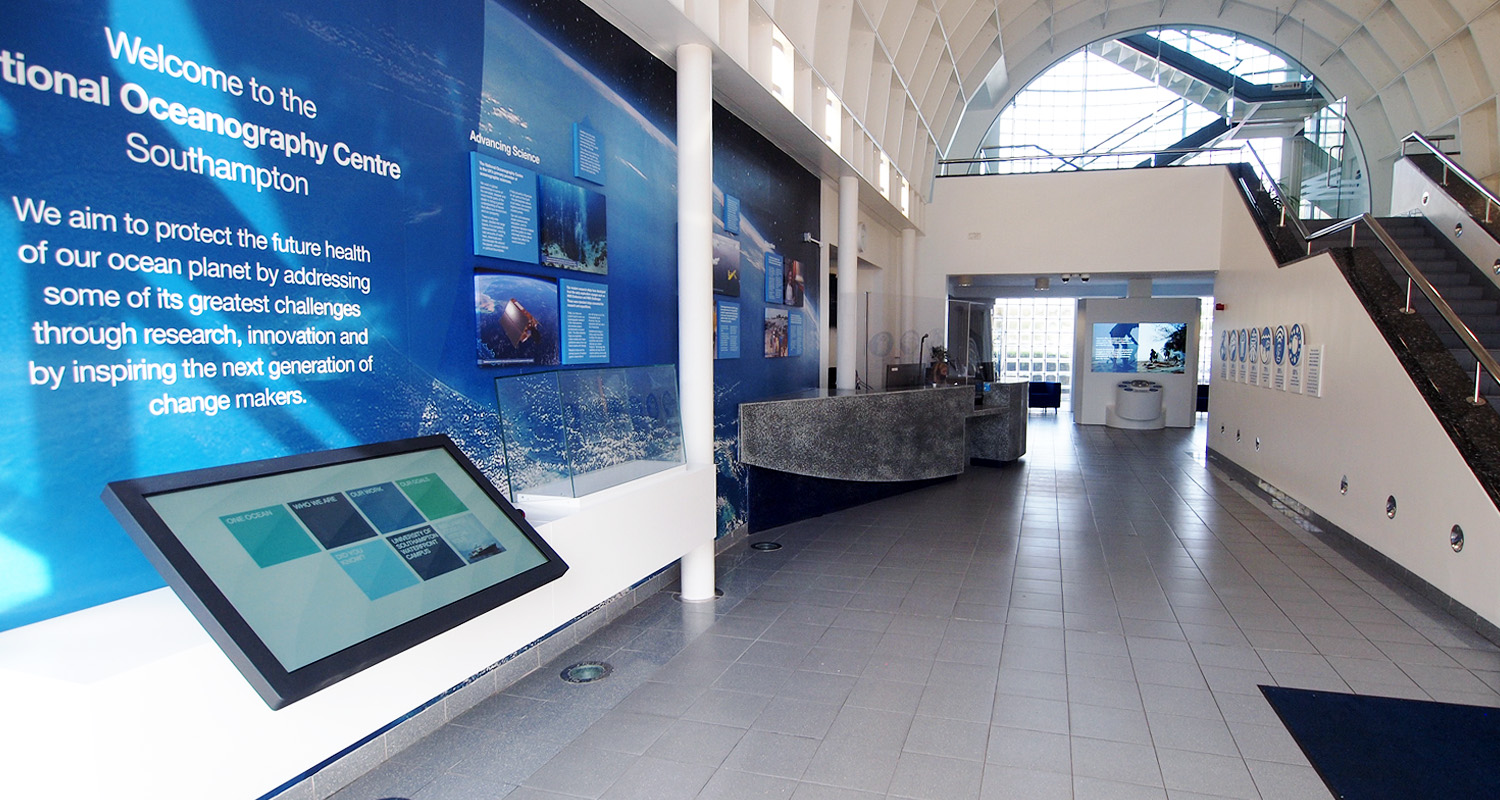
The National Oceanography Centre (NOC) stands at the forefront of large-scale oceanography and ocean measurement technology innovation. Based in the United Kingdom, it is one of the world's premier oceanographic institutions, employing approximately 650 staff dedicated to advancing our understanding of the Earth's oceans.
As an independent self-governing organization funded by UK Research and Innovation, the NOC manages the National Marine Equipment Pool—Europe's largest fleet of autonomous and robotic vehicles—alongside two state-of-the-art research vessels: the RRS Discovery and the RRS James Cook.
The NOC's mission extends beyond domestic research. The organization fosters global scientific collaboration by:
- Leading the UK delegation of the Intergovernmental Oceanographic Commission of UNESCO
- Actively participating in the European Marine Board
- Establishing partnerships with esteemed research institutions worldwide
Through these efforts, the NOC translates great science and technology into actionable advice and applications, enabling the UK to harness the full power and diversity of its ocean science talent.
50.8929°N1.3925°W"The data collected aboard these vessels isn't just valuable—it's irreplaceable. A single voyage can generate the foundational data for dozens of scientific papers and multiple academic degrees. Protecting that data is protecting the future of ocean science."
The Challenge: Connectivity in the Most Demanding Environments
The NOC had planned a significant refurbishment of its two flagship research vessels—the RRS Discovery and the RRS James Cook. This rare opportunity presented the chance to install a modern, secure IT infrastructure solution onboard both vessels. Given the infrequency of such refits, the project carried exceptional importance.
The Connectivity Imperative
In the modern world, connectivity is essential—even aboard a research vessel traversing the vast oceanic expanse. Scientists, crew, and support personnel require reliable network access for:
- Real-time data transmission and analysis
- Communication with shore-based researchers and support teams
- Access to scientific databases and collaboration platforms
- Operational systems and safety communications
The Security Imperative
The foremost priority was security. Research vessels face the same cyber threats as any enterprise—malicious attacks, ransomware, data breaches—with the added dimension that the data they carry is often irreplaceable. Each voyage generates vast quantities of research data that serve as the foundation for scientific papers and academic degrees. Losing that data to a cyberattack would represent an incalculable loss to the scientific community.
Environmental Extremes
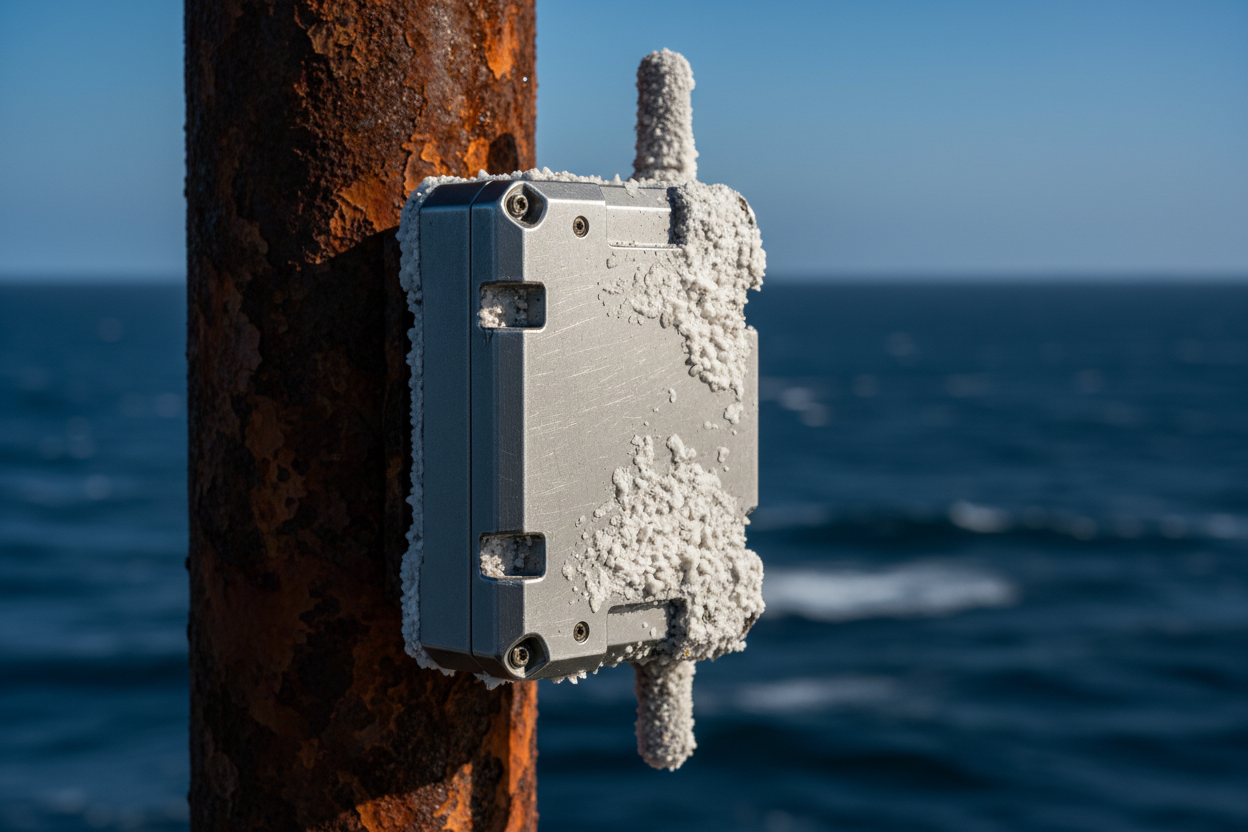
The vessels undertake prolonged research expeditions globally, from equatorial regions to the Arctic and Antarctic. Any IT infrastructure installed onboard would be subjected to:
- Extreme temperature variations
- Saltwater exposure and corrosion
- Physical shocks from rough seas
- Humidity and condensation
TruePillar was tasked with designing a solution that could withstand the harshest weather conditions on Earth—including outdoor components such as access points mounted on masts.
Architectural Obstacles
Despite their considerable size, the vessels present significant architectural challenges for IT infrastructure installation:
- Space constraints: Limited space is primarily allocated to research equipment and provisions for sustained periods at sea. IT infrastructure must fit into whatever space remains.
- Metal construction: The substantial metal structure of the vessels interferes with wireless signals, creating dead zones and disruptions that require careful design to overcome.
- Inaccessible areas: Many locations where equipment must be installed are difficult to access during the refit window.
The Immovable Deadline
The refit completion date was fixed. The RRS Discovery and RRS James Cook were scheduled to depart on specific dates, and those dates could not be moved. Any delay in the IT infrastructure installation would delay the vessels' departure—impacting research schedules, funding commitments, and international collaborations.
56.4621°N2.9707°W"When a ship has a departure date, it's not negotiable. The vessel leaves on that day. We had to deliver a complete, tested, operational network by that date—no exceptions."
The Solution: Pre-Staging, Precision Installation, and Enduring Design
TruePillar partnered with the NOC to develop a comprehensive network and IT strategy for both vessels. The approach was characterized by meticulous planning, innovative problem-solving, and an unwavering commitment to the fixed timeline.
Pre-Staging: The Critical Enabler
Given the time constraints, a pre-staging process became imperative. Over three months, TruePillar pre-staged all wireless networking equipment at the NOC facility in Southampton. This phase included:
- Comprehensive testing: Every component was tested for functionality and compatibility
- Challenge resolution: Issues were identified and resolved during testing, not during the time-critical installation phase
- Customer validation: Once the solution was approved by the NOC, equipment was packaged and prepared for transport
When the vessels reached Scotland for their final refit, the pre-staged equipment was ready. An expert team of TruePillar engineers undertook the physical installation, ensuring seamless integration aboard the vessel.
Managing the Immovable Timeline
Every project encounters technical challenges during implementation. However, this project added a distinct dimension of urgency: all challenges had to be resolved within an immovable deadline. The ability to overcome technical hurdles within the allotted window underscored the value of an experienced, highly skilled engineering team capable of swift, efficient problem resolution.
Timeline and Supply Chain Navigation
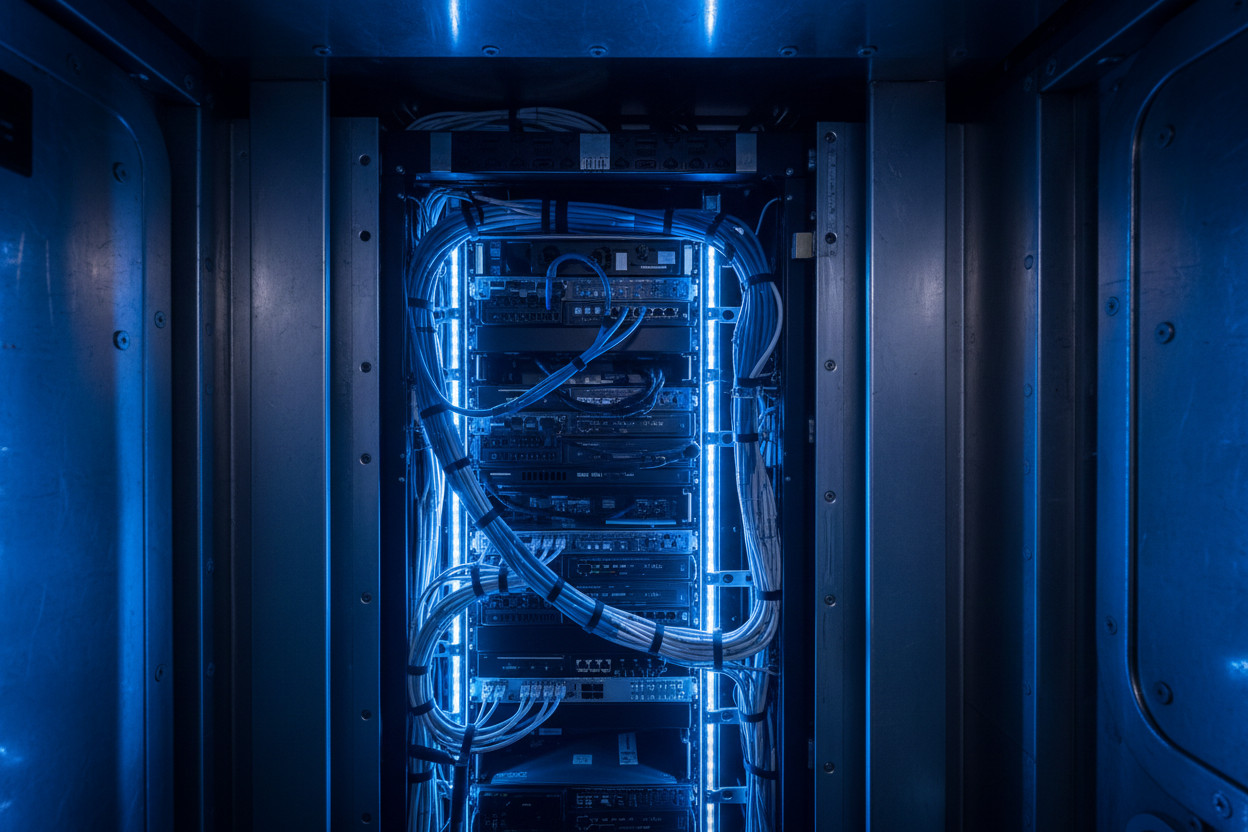
The delivery timeline was initially constrained by manufacturer supply times. The project unfolded over 11 months, from September 2022 to July 2023, with 32 weeks of physical progress from kick-off to operational handover:
Deployment Schedule
Designing for the Environment
The solution was architected to withstand extreme conditions:
- Outdoor-rated components: Access points and other outdoor equipment were selected for resistance to saltwater, extreme temperatures, and physical shock
- Redundant pathways: Network design accounted for potential failures, ensuring continuous operation
- Weather-hardened enclosures: Critical components were housed in protective enclosures suitable for maritime environments
Overcoming Wireless Interference
The vessels' metal construction required innovative wireless design:
- Strategic access point placement: Access points were positioned to minimize interference and maximize coverage, including masts for optimal line-of-sight
- Signal optimization: Wireless configurations were tuned to overcome the unique propagation characteristics of metal vessels
- Comprehensive coverage: The solution extended Wi-Fi coverage to accommodation areas—a significant improvement over previous capabilities
The Outcome: Secure, Resilient, Future-Ready Connectivity
The partnership delivered an advanced, all-encompassing wireless infrastructure solution that dramatically improved security, connectivity, and user experience aboard both vessels. The success of the engagement led to a 12-month managed service agreement with TruePillar, ensuring ongoing support and optimization.
Technical Achievements
The solution delivered the following capabilities:
- High-speed, highly available server and storage solution: four times more capacity than the previous system, in a smaller physical footprint
- High-speed data backup and recovery ensuring research data remains protected and recoverable
- Multi-gigabit network backbone supporting high-bandwidth applications and future growth
- Network segmentation and software-defined access control isolating sensitive systems
- Centralized user authentication and role-based access simplifying management while strengthening security
- Wired and wireless network access throughout the ships—from bridge to engine room to accommodation
- Software-Defined Wide Area Network (SD-WAN) connectivity with seamless failover between satellite, 4G, and point-to-point networks
- High-speed ship-to-shore connectivity in the home port enabling rapid data transfer
- Guest Wi-Fi Internet access supporting visiting scientists, collaborators, and crew
The User Experience
- Enhanced Wi-Fi coverage throughout the vessel: Connectivity now extends to accommodation areas where previously it was limited
- Reliable access in all conditions: The solution performs consistently in equatorial heat and arctic cold
- Improved productivity: Scientists and crew can access the tools and data they need from anywhere on the vessel
The Security Posture
- Protection for irreplaceable research data: Multiple layers of security safeguard the data that underpins scientific discovery
- Integrated ship-to-shore connectivity: Seamless wireless data transfer between vessel and NOC headquarters upon arrival at port
- Defense against modern threats: Protection against ransomware, data breaches, and malicious attacks
Resilience for Mission-Critical Research
- Continuous availability: Systems remain operational throughout extended voyages
- Rapid recovery: Backup and recovery capabilities minimize disruption in the event of any issues
- Future-proof architecture: The solution is designed to accommodate emerging technologies and evolving research requirements
The Strategic Partnership
The success of the engagement extended beyond the immediate deployment. The NOC entered into a 12-month managed service agreement with TruePillar, reflecting:
- Confidence in the solution: The technology delivered as promised, meeting all security, performance, and reliability requirements
- Trust in the partnership: TruePillar demonstrated the expertise, responsiveness, and commitment to be a long-term partner
- Value of ongoing support: The NOC recognized the importance of continuous monitoring, optimization, and evolution
Looking Forward
With the new IT infrastructure in place, the RRS Discovery and RRS James Cook are equipped for the next generation of oceanographic research. Scientists can focus on their mission—advancing our understanding of the Earth's oceans—confident that the data they collect is secure, the systems they rely on are reliable, and the connectivity they need is available.
For the National Oceanography Centre, the project represents not just a technological upgrade, but a strategic investment in the future of UK ocean science.